The dissents tell the story
The second FOMC meeting under the leadership of Chair Warsh was more edgy and triggered more market volatility. There was no change to the Fed Funds rate (still at the 3.50-3.75% range) but there were three dissents in favor of an immediate hike. Given the terseness of the FOMC statement (essentially unchanged from June), the individual statements put forth by the three dissenters offer more color on the question of policy direction.
Minneapolis Fed President Kashkari: “But to manage against the risk that high inflation could become entrenched, I would rather tighten policy incrementally as we gather more data on the path of inflation and employment. If inflation remains elevated, in my view, a potential series of small policy moves would be better than waiting and eventually concluding that even bolder actions were necessary. On the other hand, if inflation durably fades, a strategy of small policy steps would allow the FOMC to slow or pause subsequent adjustments without unnecessary impact on the real economy.”
Dallas Fed President Logan: “Labor, consumption and financial market conditions indicate that monetary policy is not restraining the economy. Without any policy restraint, inflation will likely continue to trend above target until there’s an unanticipated shock. The FOMC cannot count on unanticipated shocks to achieve its goals and can always adjust policy if unanticipated shocks occur. Modest action in the near term would reduce the likelihood of needing to take sharper action later.”
Cleveland Fed President Hammack: “A higher federal funds rate would help restrain economic activity and reduce inflationary pressures. I preferred to move at our recent meeting because I did not see the current policy stance as appropriately restrictive.”
The three excerpts above share a common thread: the idea that inflation is not convincingly trending toward the target and that policy is not sufficiently restrictive to make that happen. As such, some tightening is needed, and it is better to do it gradually. In other words, start early and go slow rather than wait and go fast. Critically, none of the dissenters appear to believe that the Fed is “behind the curve” and the tightening they seem to imply is still very much a pre-emptive kind of action. This is important because if even the hawks see tightening as pre-emptive, the majority of the FOMC members likely believe that there is still a window of time before rate hikes become compelling. And that window can bring about favorable data evidence that makes the hikes less, rather than more compelling over time. We continue to believe the Fed will just barely remain on hold this year.
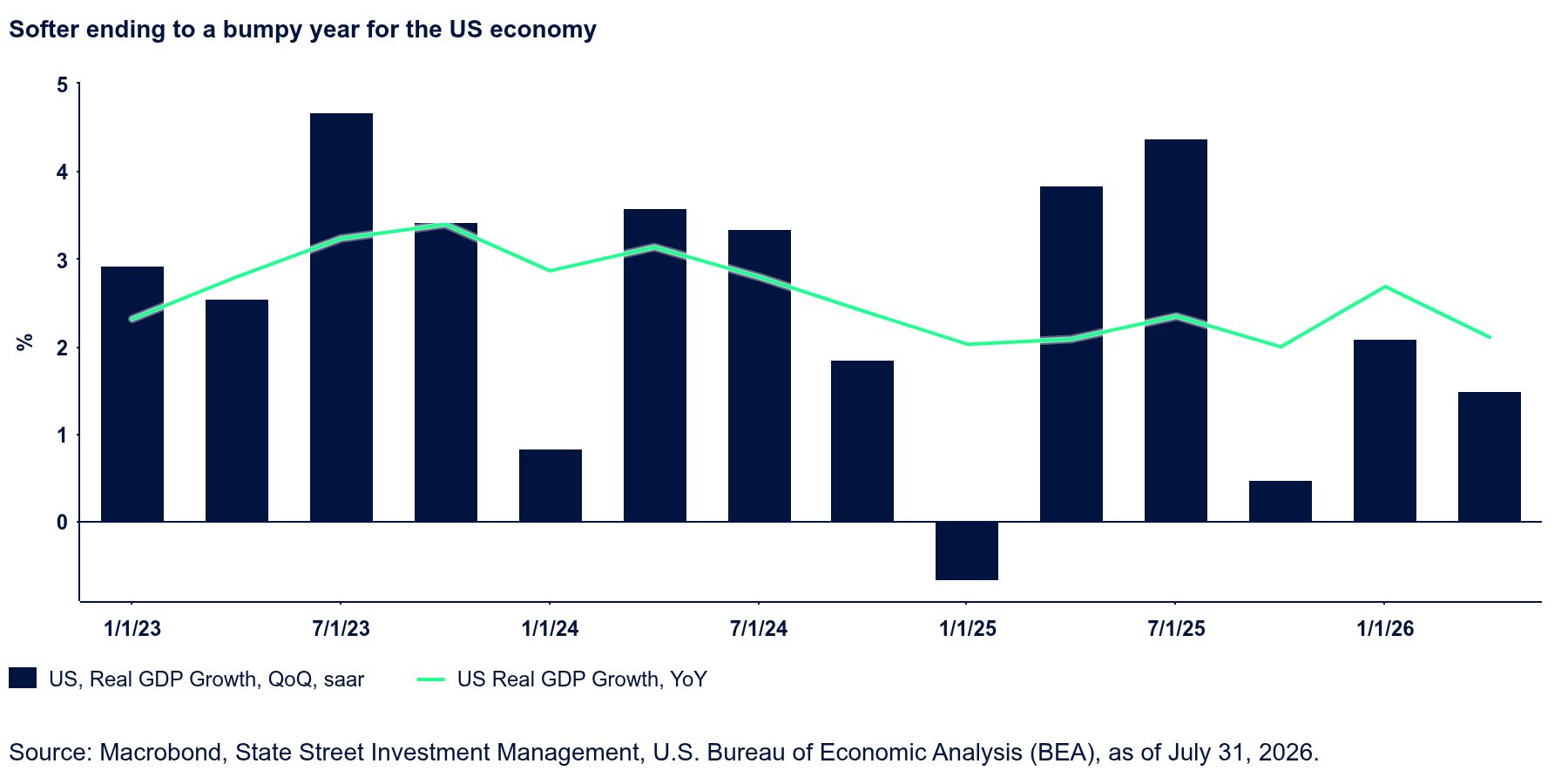
Meanwhile, advance estimates for second quarter GDP peg growth at a lower-than-expected 1.5% seasonally adjusted annualized rate (saar) (Figure 1). Private consumption made an outsized contribution, but the strength is partly financed by dissaving and partly boosted by the World Cup. Fixed investment was robust but with split performance across segments (strong equipment and IP, weak structures and residential). Trade was a sizable detractor. The data remains consistent with our 2.3% full-year GDP growth forecast.