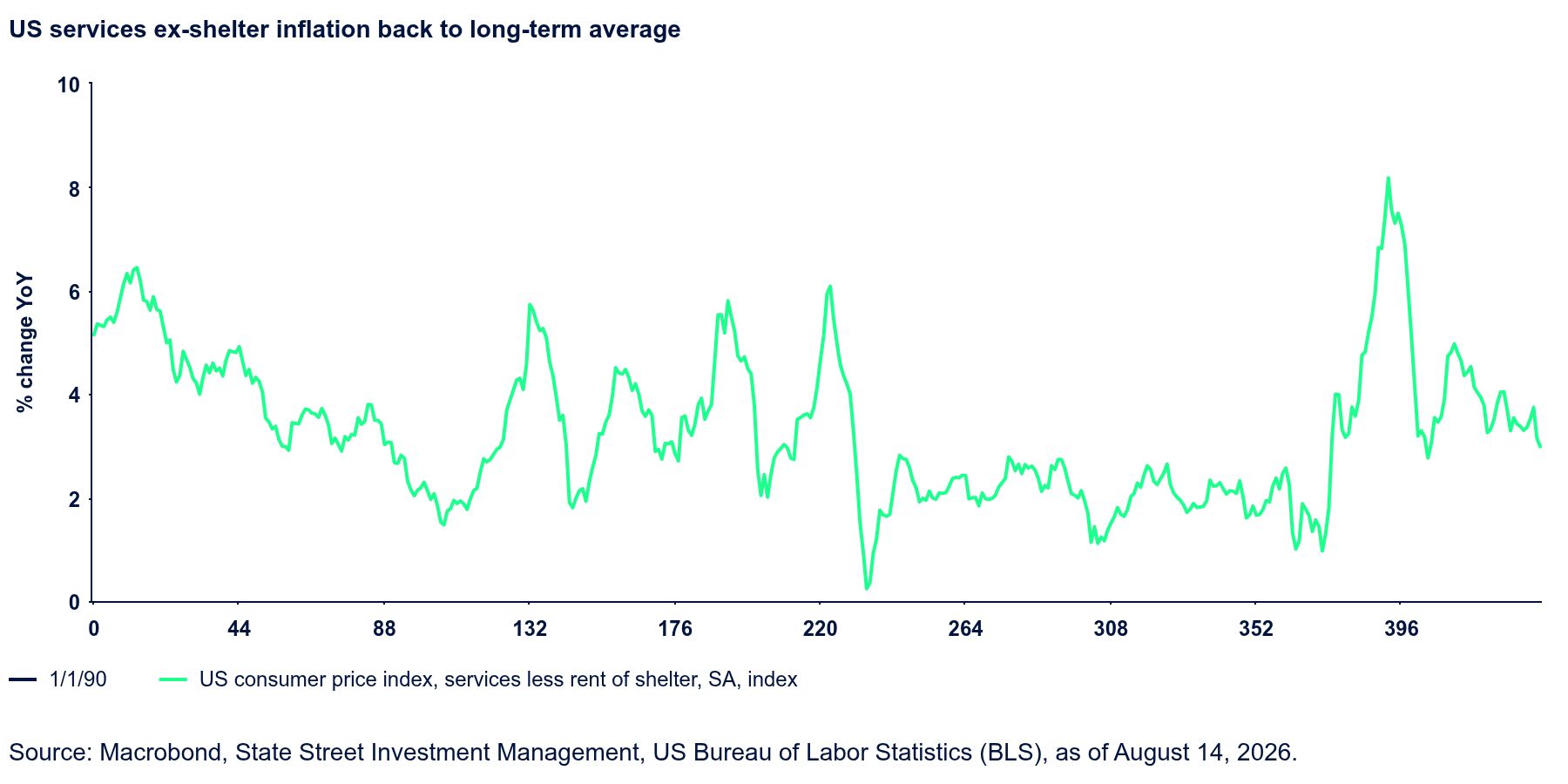
More reassuring inflation news
One month never makes a trend, which is why June’s excellent inflation report had to be read primarily as relief after a stretch of elevated readings. Two months will not make a trend, either, but they represent a growing body of evidence on which conclusions can be formulated with greater confidence. Indeed, this is the lens through which July’s encouraging CPI print should be interpreted. Our conclusion stands: there is already enough here to stay the Fed’s hand in September.
Consumer price inflation matched consensus expectations in July, with headline coming in at 3.4% YoY and core at 2.5% YoY. Overall consumer prices advanced 0.1% MoM (rounded up from 0.07%) while prices excluding food and energy increased 0.2% MoM.
The main categories offered few surprises. Energy prices fell 1.5% MoM, food prices edged up 0.1%, services rose 0.2%, and shelter advanced a modest 0.1%. Two areas where some payback had seemed likely, used cars and medical care, delivered just that. Used car prices rose 0.4% MoM, narrowing the persistent gap with auction prices, while medical care also bounced. Airfares increased another 2.2% MoM and are now 25.5% higher than a year earlier. By contrast, motor vehicle insurance moved further into deflation, declining 4.5% YoY.
The shelter component deserves a more nuanced analysis. Overall rent of shelter costs rose a modest 0.1%, helped by another sizable drop in the lodging away from home category (-2.8% MoM). To some extent, the back-to-back declines are a little puzzling in the context of the World Cup, but they may reflect some pricing power deterioration in the broader space as consumers become more price sensitive. This interpretation matches the soft retail sales print for the month (control sales down 0.4% MoM). Ultimately, time will tell. Meanwhile, rent of primary residence rose 0.3% MoM, a touch above where we’d like to see it, but good enough for now.
The reassuring note on inflation continued with the producer prices update. PPI-final demand inflation eased seven tenths to 4.7%, further removing the sense of urgency for Fed tightening.